
MTI Journal
MTI Journal.27
Data Analytics and the Challenges
of a Decarbonized Society
Narihiro Mitsushima
Researcher, Maritime and Logistics Technology Group*
*The job title is as of December 10, 2025
Introduction
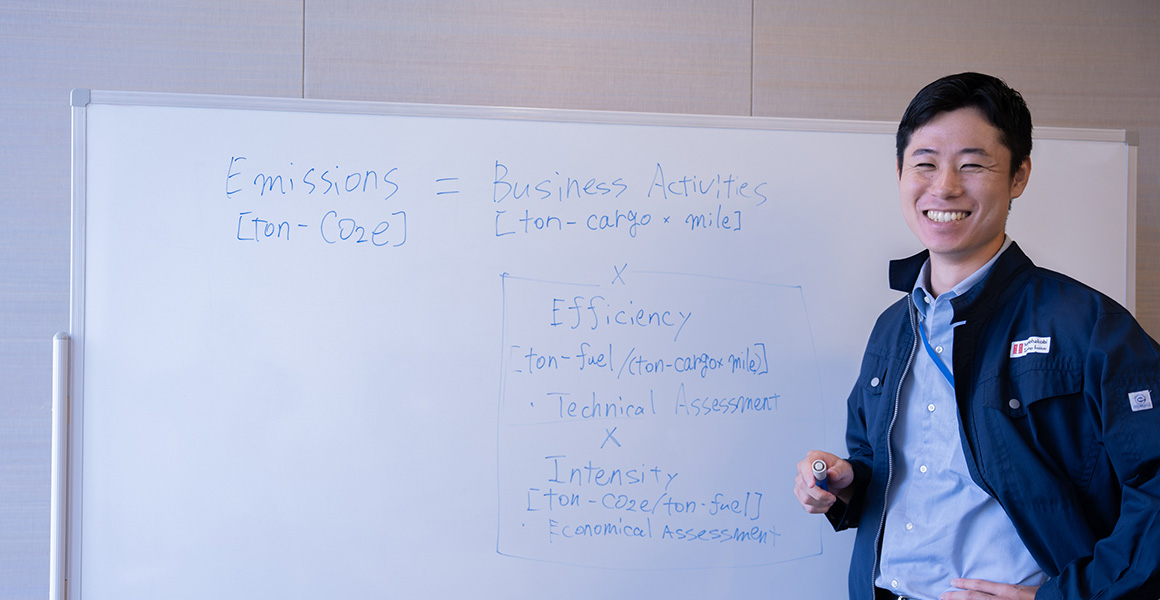
I joined MTI in October 2023 and work principally in data analytics and solution development. Prior to this assignment, I worked at an overseas NYK Line subsidiary that focuses on the operation management of car carriers and sales related to automobile transportation. By leveraging both a global perspective and hands-on operational experience, I am working to integrate and analyze diverse sensor data collected from vessels, as well as a wide range of maritime transportation data. Through these efforts, I aim to propose practical value-creating solutions that respond to the needs of both internal and external stakeholders.
The Decarbonization Trend in the Shipping Industry
In recent years, international efforts toward decarbonization in the shipping industry have accelerated significantly. The International Maritime Organization (IMO) adopted its initial GHG reduction strategy in 2018, setting long-term emission-reduction targets. In 2023, a revised strategy was approved, reinforcing initiatives aimed at achieving net-zero GHG emissions around 2050.
Against this backdrop, the Energy Efficiency Design Index (EEDI) has been applied to newbuilding, while the Carbon Intensity Indicator (CII) has been introduced for existing vessels. As a result, improving energy efficiency and operational performance is now required throughout both the design and operational phases. In addition, various countries and regions have introduced their own environmental regulations and economic incentive schemes, thus further increasing the importance of fuel diversification and operational optimization initiatives.
NYK Group’s Decarbonization Strategy
The NYK Group is implementing a phased and practical decarbonization strategy, including maximizing operational efficiency and introducing alternative fuels, in order to achieve its long-term environmental targets. Data collection and analysis related to maritime transportation are becoming an increasingly important foundation for these initiatives. Efforts are underway to establish a shared data platform that enables close collaboration between a wide range of internal and external stakeholders to address decarbonization challenges.
Initiatives at MTI
As the research and development arm of the NYK Group, MTI promotes initiatives that contribute to GHG reduction from both hardware and software perspectives. These steps include verification of advanced technologies for reducing environmental impact and optimization of vessel operations using large-scale operational data. These research activities span multiple layers, ranging from onboard technology demonstrations to operational optimization based on data analytics.
In the projects I am responsible for, we are developing a data-management framework that enables accurate monitoring and assessment of GHG emissions. Because the type and scope of data collected vary by vessel, establishing consistent data management and ensuring data quality across internal and external stakeholders is a key challenge. To address this, we are systematically correcting discrepancies and verifying data quality across the data-collection, aggregation, and analysis processes. This approach enables a seamless use of data for analysis, evaluation, and countermeasure formulation. As a result, indicators requiring timely responses—such as FuelEU Maritime and CII ratings—can be monitored with greater accuracy and flexibility.
In parallel, we conduct simulation-based impact analyses of emerging environmental regulations, including IMO’s mid-term GHG reduction measures and carbon taxation schemes being considered by individual countries. By evaluating cost impacts across the fleet from multiple perspectives, these analyses serve as foundational data for determining future regulatory responses and optimal operational strategies. At the same time, this supports rational decision-making that balances economic efficiency with environmental compliance.
Further, we focus on scientifically identifying the factors that drive GHG emissions. Using actual operational data, we quantitatively analyze how variables such as vessel speed, fuel type, use of alternative fuels, changes in transport demand, and equipment efficiency affect emissions. These insights clarify each factor’s relative contribution to GHG reduction and support concrete decision-making related to operational adjustments and equipment improvements.
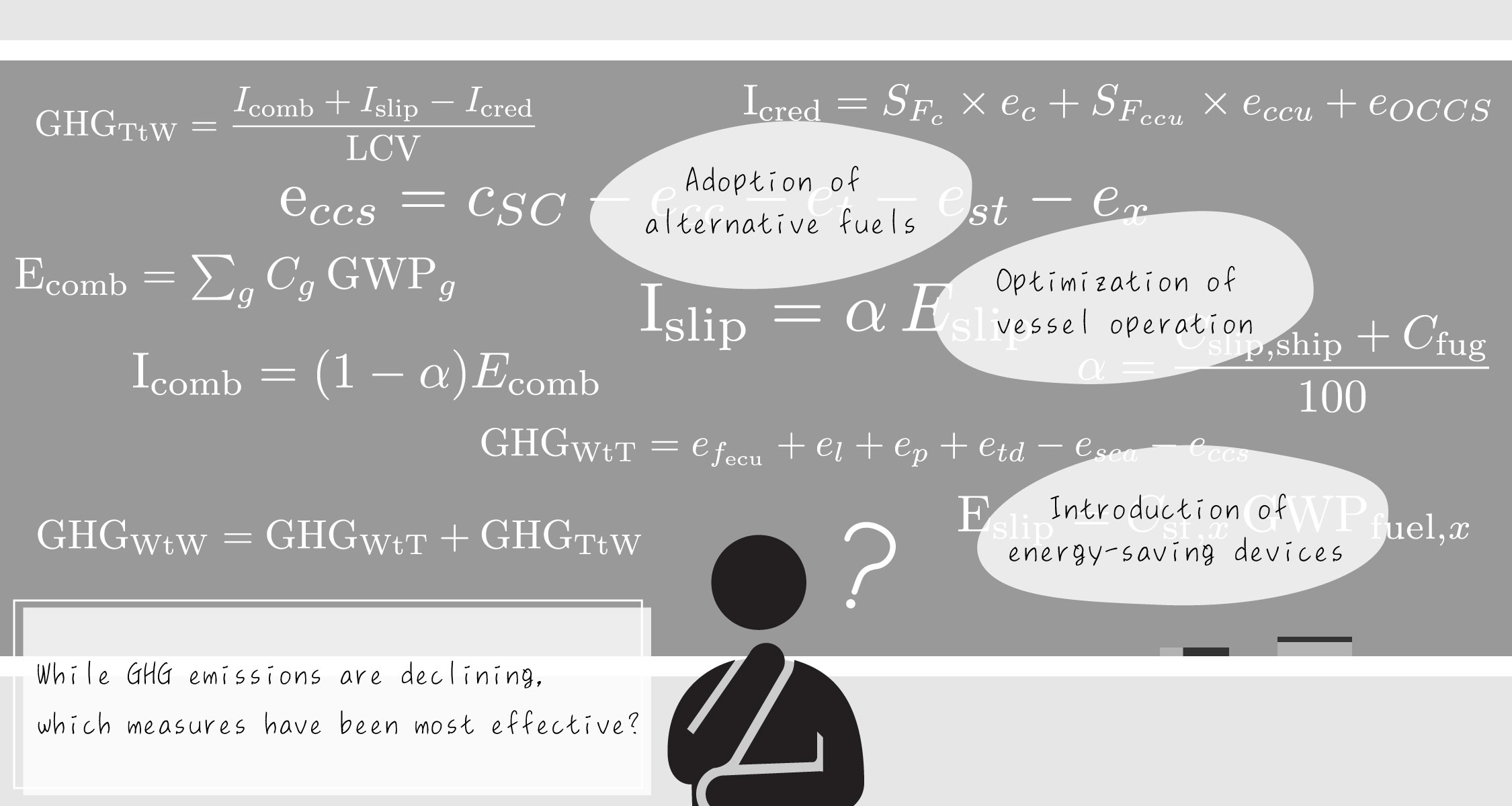
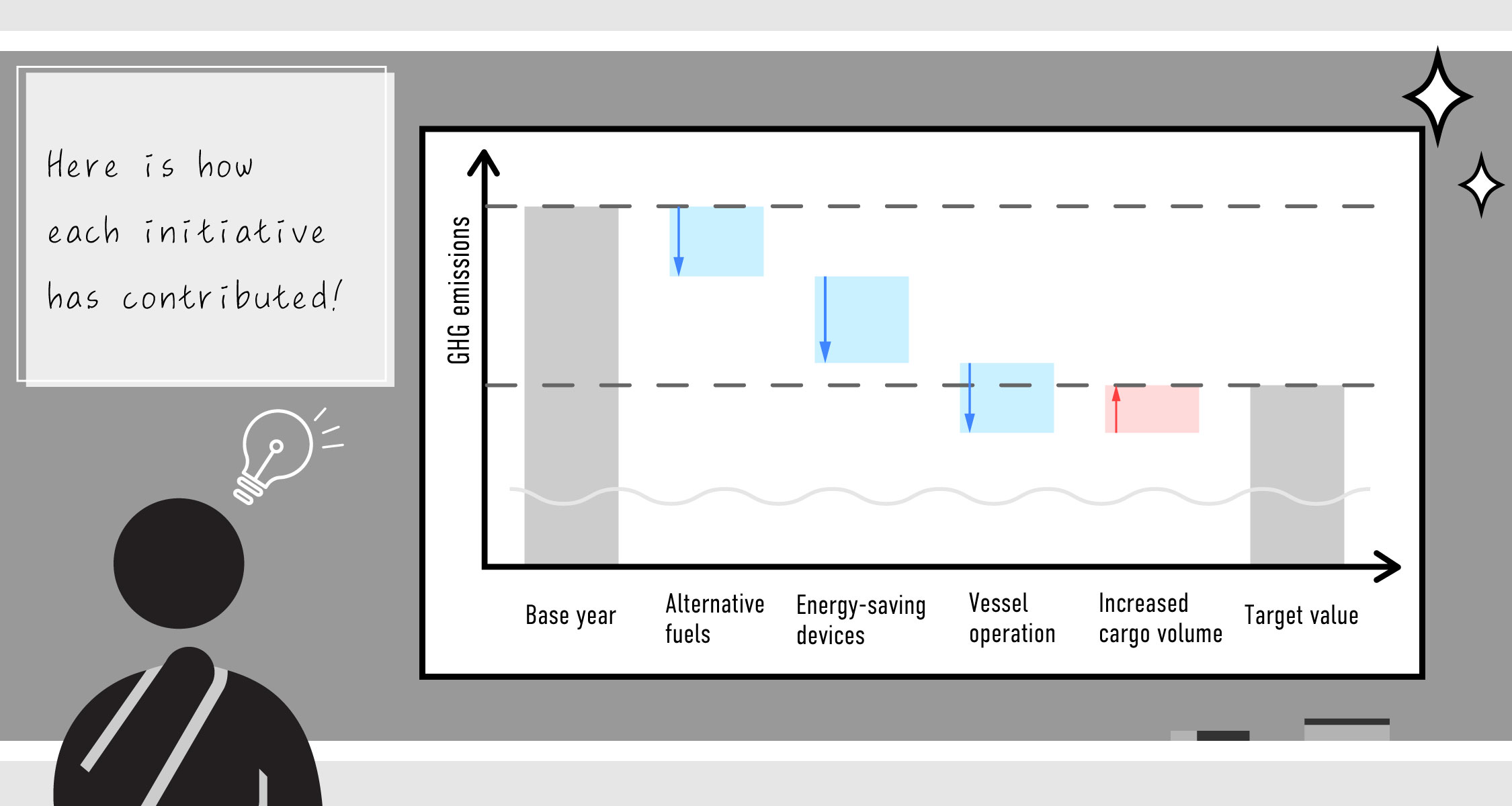
Through these efforts, MTI aims not only to respond to environmental regulations but also to advance data-driven operational and environmental management. By deploying research outcomes across the NYK Group, MTI contributes to the realization of sustainable maritime transportation and the establishment of a technological foundation for a decarbonized society.
Balancing Decarbonization and Economic Viability
Promoting decarbonization requires not only reducing environmental impact but also maintaining economic viability. In actual operations, voyage plans may need to be flexibly adjusted in response to external factors such as weather conditions and port constraints. In some cases, prioritizing customer requirements or schedule reliability may be necessary, which can affect fuel consumption and emissions performance. Such on-site operational decisions play a crucial role in balancing environmental responsibility and economic efficiency.
By enhancing MTI’s data infrastructure and analytical methodologies, we aim to improve both the accuracy and responsiveness of information that supports operational decision-making, enabling more balanced and informed decisions at the corporate level.
Driving Innovation for Sustainability
Throughout its long history, the NYK Group has continuously embraced technological innovation in response to changing times. To ensure sustainable growth going forward, innovation toward decarbonization will be indispensable. MTI brings together secondees from a wide range of maritime-related organizations, including shipyards and marine equipment manufacturers, creating a strong foundation for open innovation that integrates internal and external expertise. This approach is clearly reflected in MTI’s Mission, Vision, and Values, which emphasize the role of an open innovation leader that continues to take on challenges alongside operational teams.
From my perspective, I aim to contribute by combining both the development-side and user-side viewpoints, collaborating with diverse partners to create practical solutions. By sharing the knowledge and experience gained at MTI across the NYK Group and working in collaboration with the broader maritime industry, I hope to contribute to achieving decarbonization goals and delivering broader societal value.
Conclusion
Efforts toward decarbonization require not only technological development but also close collaboration between internal and external stakeholders under a shared understanding and common data foundation. Through continued research and development, MTI will contribute to the sustainable growth of the NYK Group and the maritime industry as a whole, supporting the transition toward a decarbonized society.